Tapirs of the Osa: Appreciating Costa Rica’s Gentle Giants
Our luxury villas in the southern zone of Costa Rica are full of impressive wildlife. Guests often report seeing sloths, monkeys, macaws, toucans and more.
One elusive animal that only a lucky few will get to see is the Tapir.
Where Can You See a Tapir in Costa Rica?
The truth is that it’s extremely rare to see the ‘Baird’s Tapir’, (or ‘Danta’ in Spanish), in the wild. But the place where you are most likely to catch a glimpse of this critically endangered species is right near where YouGetHere’s luxury villas are located. The southern zone of Costa Rica. And more specifically, in the Osa at Corcovado National Park near the Sirena Station.
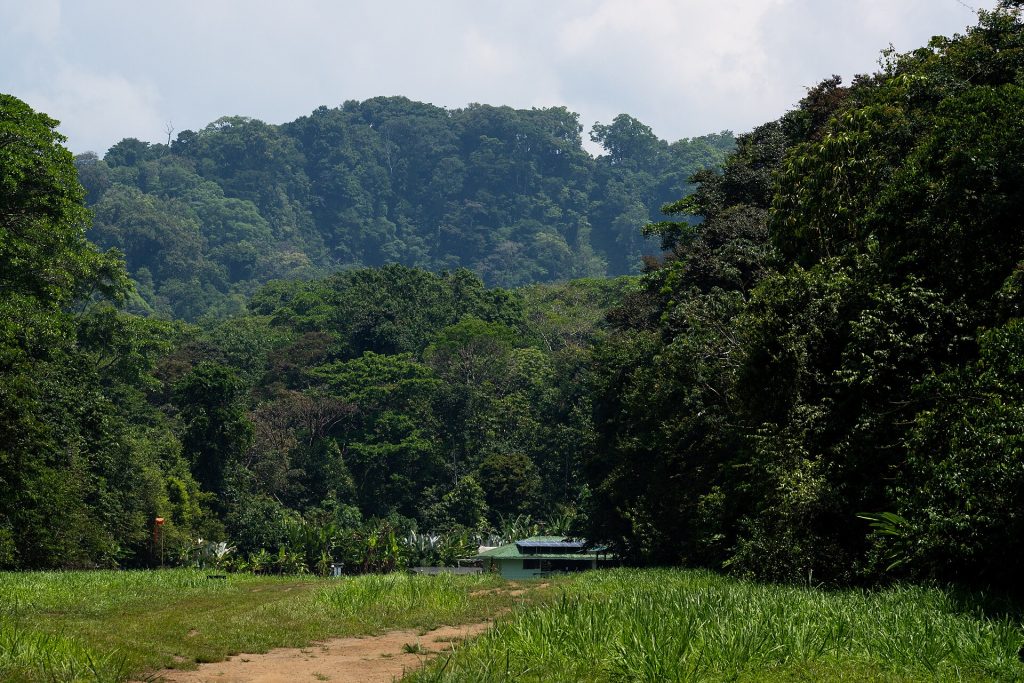
Corcovado National Park
The undisputed “hotspot” of Tapir sightings take place at the Corcovado National Park. It’s not surprising as this park literally places you in “the most biologically intense location on earth.” The tapir prefers remote and dense areas of rainforests that have easy access to drinking water.
Lucky for you, we can help get you set up on a tour to this incredible national park. Just email us right here for complimentary assistance with reservations.
However, if your absolute number one goal is to see a Tapir on your vacation, you’ll need to step it up a notch and get a bit more strategic, and far less comfortable. Rather than heading out for the day after your Costa Rican coffee is enjoyed on the pooldeck, you’ll need to be up and adam at 4:30 a.m. Yep, that’s before sunrise folks.
Due to the park’s strict capacity, you’ll need to secure official SINAC permits well in advance. And also make sure you are content to enjoy dorm-style accommodations, complete with mosquito nets and open-air roofing to enjoy the cool breeze and sounds of the jungle. Outside snacks are banned, so you’ll be provided freshly cooked meals. Be sure to leave your gluten-free, keto friendly or plant-based alternatives (plus that fine wine) back at the villa. If all that sounds ideal, get in touch with either Uvita Info Center or SINAC directly to learn more and make your dream a reality.
How Can I See a Tapir in Costa Rica?
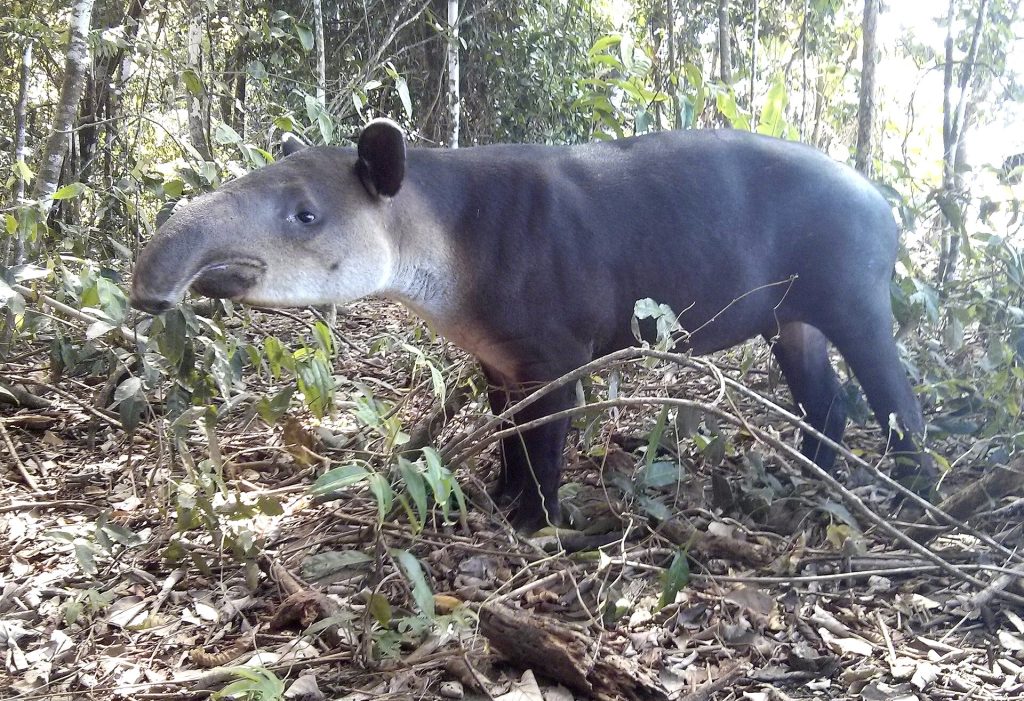
As previously mentioned, the Corcovado National Park offers one of the best chances for you to witness a Tapir in action, day or night. Whether you opt for a day trip to Corcovado with our preferred tour provider, or the intensive overnight experience mentioned previously, is completely up to your level of motivation and comfort in the jungle.
On the day-trip to Corcovado National Park, if you don’t see a Tapir you can most certainly expect to see several of the following: Monkeys (howlers, titi monkeys or white-faced capuchins), peccaries, pizotes, crocodiles, caimans, exotic birds such as macaws, toucans and aracaris, hawks, agoutis, iguanas, lizards, butterflies (like the blue morpho) leaf-cutter ants, poison dart-frogs, grasshoppers and so much more.
What is the Best Time to See a Tapir?
While Tapirs are active at all hours, they quite prefer the night. A primarily nocturnal species, they head out for a forage when the temperature is cool and the fruit has recently fallen. Their late night snacking run features a ‘zig-zagging’ of sorts along frequently taken paths. We call these corridors.
In fact, corridors exist all over the Osa, with one we personally know of near our villa, Tulu Azul. Tapirs aren’t the only animals to use corridors. The one that passes close to Tulu Azul is actually labeled by signage further east, on route 243, the “Paso de la Danta Biological Corridor.” Translation: Path of the Tapir, Biologic Corridor.
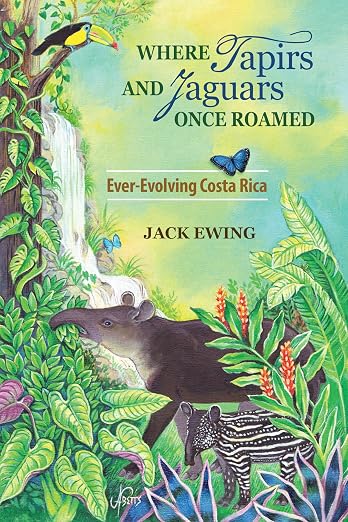
This is a 82,000-hectare corridor that connects the mountain range in the east to the coastal pacific near Hacienda Baru Wildlife Refuge. We highly suggest visiting the Hacienda Baru Refuge and while you’re there, grab a copy of the wonderful book, “Where Tapirs and Jaguars Once Roamed,” by refuge owner, author and environmentalist Jack Ewing.
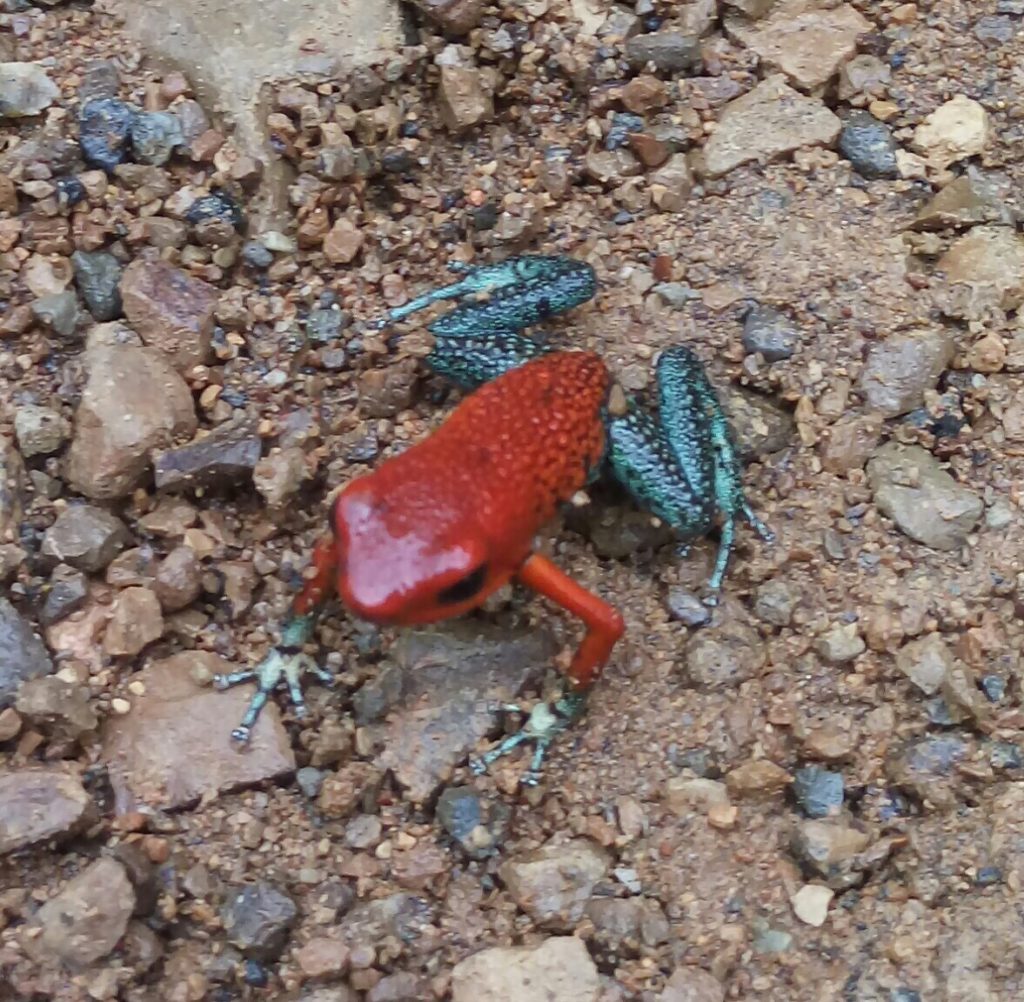
At the crossing near Tulu Azul, many other animals have been spotted on the path: including jaguarundi, howler monkeys, sloths, boas, deer and peccaries. We even snapped a photo of this tiny strawberry poison dart frog (aka ‘blue-jeans frog’) right on that path, too.
What Do Tapir Do for Fun?
Just like you and your friends, Dantas love a good swim. They are often seen wading in pools of water on hot days. (Exactly the same as our guests tend to do at the incredible Jade House, which features three pools!).
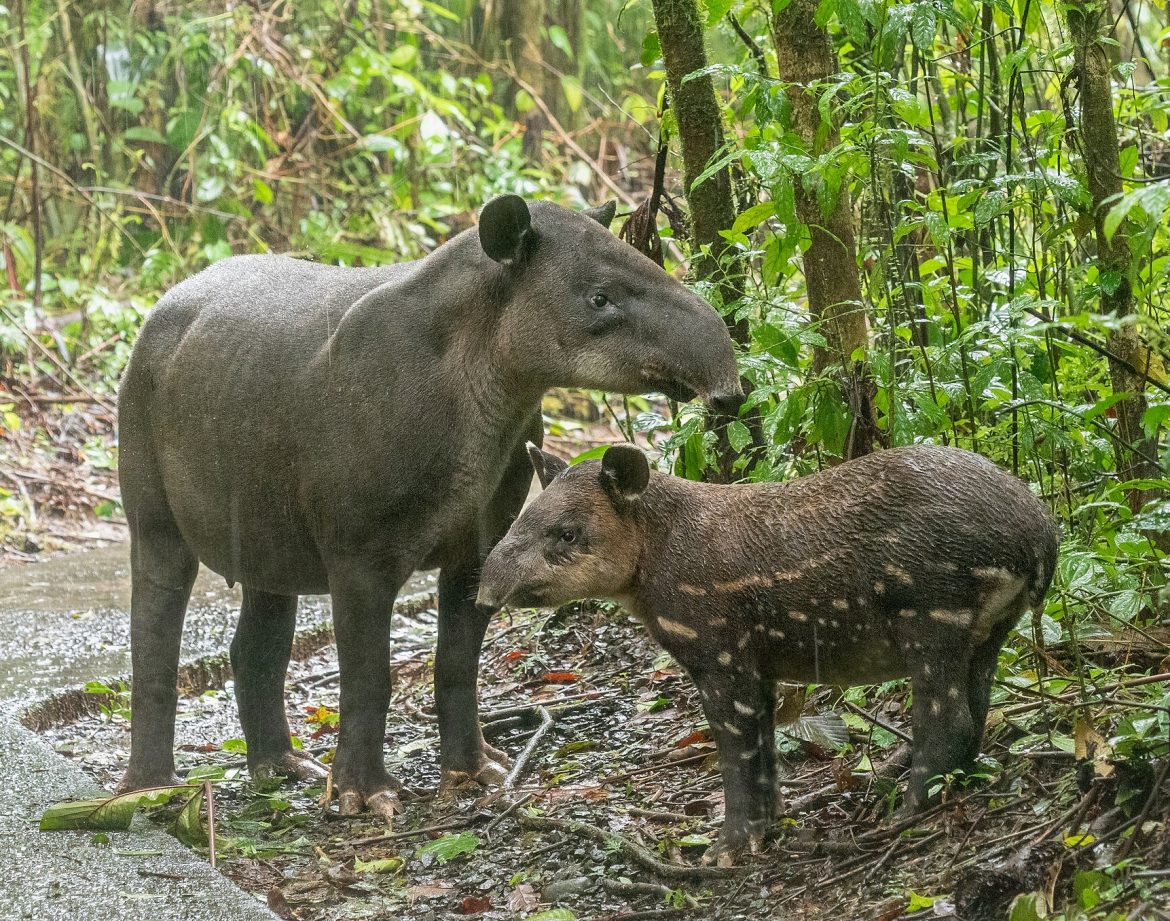
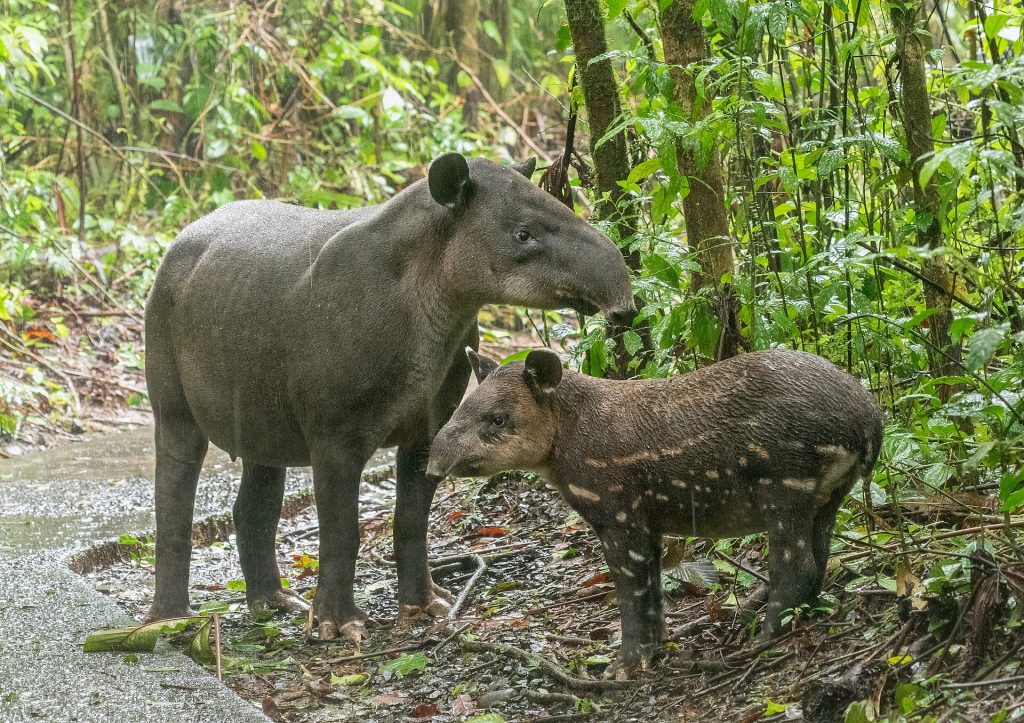
These animals choose long-term mates and remain monogamous. The female outweighs the male, but the both can clock in at 300-500 pounds. For the first several weeks of a baby tapir’s life, mom heads out to forage and returns frequently for feeding times. After that, the baby will join both Mom and Dad for some fun in the water pools and quality time out foraging for yummy fruit and leaves. Both parents enjoy raising and tending to their young and they all sleep together as a family.
These mammals are the largest native land mammals in Costa Rica. Despite their hefty size, they are herbivores. Plants that are rummaging height, floor to 4 feet, really hit the sweet spot. This includes not only leafy greens, but some small twigs, lovely flower blossoms and of course whatever delicious Costa Rica fruit is in season.

Why are Tapirs Endangered?
Unfortunately, these lovely creatures have been cruelly dealt a spot on the endangered species list. Despite having only two natural predators, the crocodile and the jaguar, the number of Danta’s has declined. They are actively battling a list of challenges that include (or have included) deforestation, loss of natural habitat, diseases transferred from domestic animals like livestock and pollution to their water pools. These have all had tragic consequences for this beloved species.
However, here in the beautiful country of Costa Rica, this animal’s security has become a top priority. The Danta of this country are fortunate to be so actively supported by many Osa Conservation Groups and individual Ticos who ensure Tapir families continue to grow and thrive year after year.
That being said, all of us can be extremely grateful for the work of one special person, Esteban Brenes-Mora. As a child he fell in love with the Tapir, just as your own little explorer might do on your family vacation to Costa Rica.
Esteban’s childhood experience led him to become a successful biologist and conservationist. He began a small tapir-focused NGO called Nai Conservation that later evolved into the Costa Rica Wildlife Foundation. He has also lent his expertise to Re:wild. From the difficult work of this one incredible human, the Baird Tapir are increasing in numbers in their wild sanctuary of southern Costa Rica.
“The tapir is a super-resilient species. They have changed so little in millions of years. Their genetics are so viable that even though their populations have been drastically reduced, they have the ability to recover. If we give them the chance, they will come back. And they will come back strong.” ~Esteban Brenes-Mora
What to do if you see a Tapir:
If you become one of the chosen few who lay your eyes on this stunning creature be sure to follow the guidelines. Stay at least 30 feet away from the animal. Never ever try to touch or feed a Tapir, or any wild animal in Costa Rica. Do not use flash photography which can scare them and cause undue stress. Always be respectful of all wildlife you encounter on your amazing vacation in Costa Rica.
Pura vida, and good luck out there!