
Weird and Wild: The Secret Lives of Sloths in Costa Rica
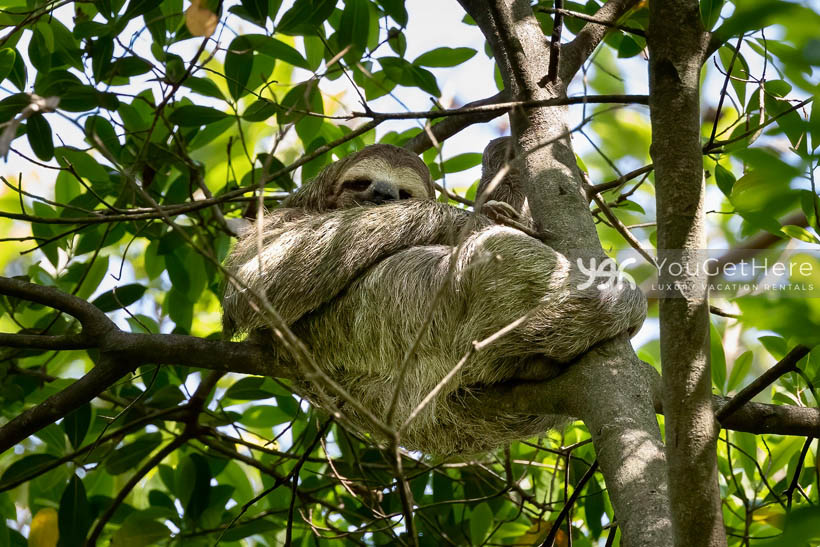
Sloths in Costa Rica are a big deal.
Visitors love to spot these peaceful creatures lounging in the treetops at our luxury vacation rentals.
Sloths are extremely popular and for good reason. But we can’t help but feel that a few of their unique characteristics are quite misunderstood. Here are five weird and wild facts you should know about the sloths of Costa Rica.
Sloths are Stealth & Strategic Survivalists
It’s time to stop the sloth-bashing and retire the old “sloth’s are lazy” storyline. A sloth’s movement is strategically measured. This peaceful creature has developed a sophisticated, multi-layered survival strategy centered on camouflage, stealth, and energy efficiency.
In fact, the sloth is so stealth, its movements fall below the attention triggering threshold of almost all predators.
While the jungle zigs, a sloth zags. Rather than relying on speed (so predictable), the sneaky sloths have evolved a motion that makes them nearly invisible and largely unnoticeable to their main predators, which include jaguars and ocelots.
Frankly, it’s genius. All of us can agree that basking in the sunshine and listening to the waves roll in is much superior to running from an apex predator capable of hitting 50 mph! But hey, you do you.
Sloths Do Not Produce Body Odor

Sloths are absolutely adorable from afar. But anyone who has met a sloth up close and in-person will have a hard time believing they don’t have a stinky odor.
However, it’s true. Sloths themselves are not stinky and do not smell. We’ve set the record straight. That smell is coming from the prolific species of algae, fungus, moths and beetles living on their hairy backs. We agree that beetles in back hair sound atrocious, but this symbiotic arrangement means they smell exactly like a plant to predators.
According to Slothopedia, “sloth fur supports an entire mini-ecosystem, including several species of moths and beetles that are found nowhere else on earth.”
This top-notch smell tactic is effortless for the sloth. The tactic shouldn’t be scoffed at either. Even humans have tried using smell tactics such as ‘people sniffers’ designed to identify enemy troops nearby through the amount of ammonia from sweat and urine in the air.
Sloths Closest Relatives are not Primates
This one might come as a big shock, but sloths and monkeys aren’t closely related at all. Any similarities we see between the two actually evolved separately. Aside from living in the trees and having long arms these species are extremely different.
So who is the sloth related to then?
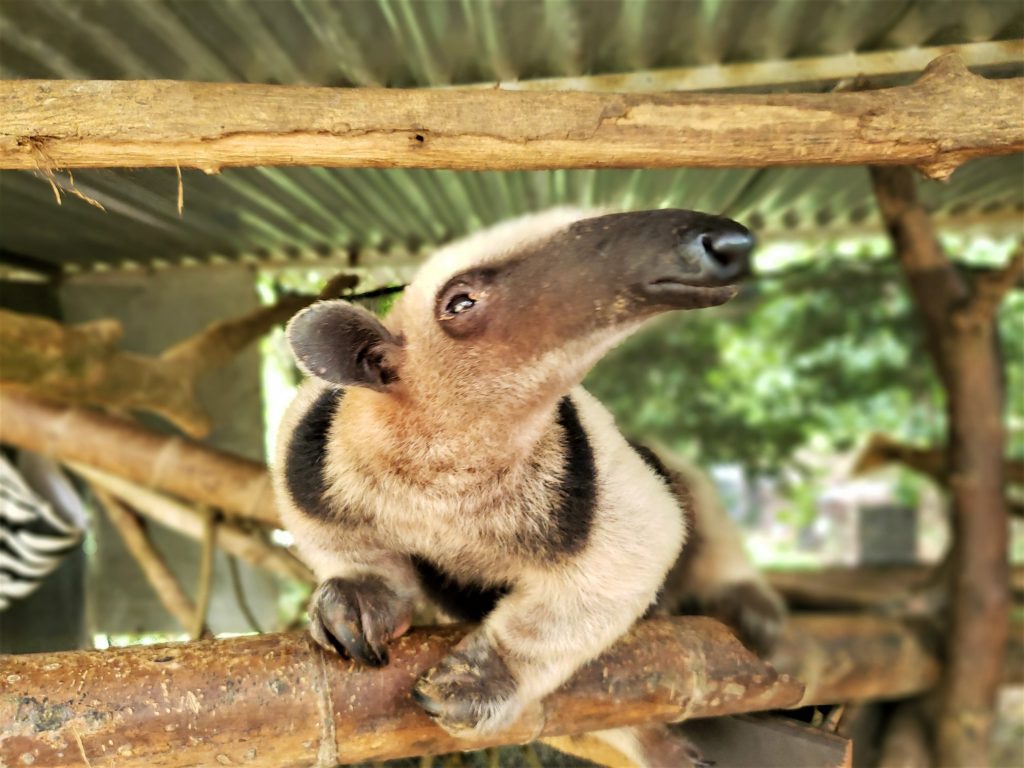
The sloth’s very closest relative is the anteater. These two animals are both card-carrying members of Xenarthra superorder. The ‘superorder’ has a total of 31 still-living, non-extinct species on the roster.
“The very name ‘xenarthrans’ literally translates in Greek as “strange joints” and its members all share unique articulations in the lower spine.”
Sloth Conservation
Both sloths and anteaters have some crazy long claws. Their claws are so long in fact, that they both need to walk on their knuckles. The sloth uses his claws for hanging from branches and climbing, while the anteater needs his sharp front claws to tear open extremely tough “concrete-like” termite mounds.
Both species will use their claws in defense and also spread their arms to appear larger when threatened. The anteater’s predators are the same as the sloths’ — jaguars and ocelots.
Sloths Don’t Need to Share
I once went to dinner with friends at Sabor Espanol in Uvita, Costa Rica. This fine establishment served up incredible dishes local to Spain. Beef sirloin, grilled lamb, ribs, chicken skewers with bacon. It was a meat lover’s dream. But as the only vegetarian in the group, I didn’t have to share a single drop of my gazpacho. I was smiling like a sloth.
Similar to my gazpacho goldmine, the rest of the jungle is just not interested in much of the Sloth’s preferred pallet.
“By sticking to this diet, they avoid competing with other animals for nutrient-rich food.”
Jaguar Rescue

For example, the mango fruit is coveted by hundreds, if not thousands, of species. Starting with us humans, down to monkeys, toucans, agoutis, iguanas, kinkajous, and about 500 species of insects. Even crocodiles have been spotted enjoying a mango.
While a sloth can eat a mango too, their primary diet of leaves come from over 70 different types of trees. Many of these tree leaves are very toxic.
They have little competition in the toxic leaf aisle of the grocery store and just don’t need to share their food sources. A very unique position for an animal to be in around here.
Thanks to their complex digestive system, the sloth can safely break down and metabolize the toxic chemicals with their gut bacteria. In fact, the excessive gas produced while digesting all these leaves means that sloths are usually incredibly bloated. And that brings us to our final fun fact.
Sloths Are Excellent Swimmers
Sloths don’t take all that bloat for granted. They capitalize on the gas from digesting leaves and make like a giant flotation device. Because sloths cannot jump from limb to limb like their canopy neighbors, the howlers and white-faced monkeys, sloths take to the waterways. Surprisingly, sloths can swim much more efficiently than they can traverse land.
The two-fingered sloth (Choloepus hoffmanni) and the three-fingered sloth (Bradypus variegatus) both grace the canopies in southern Costa Rica. Of the two, three-fingered sloths are more likely to be spotted locally. Similarly, the three-fingered sloths are more comfortable navigating the water than the two-fingered sloth.
Anytime there is a break in the tree canopy, a sloth will need to crawl or swim to the next territory.
There you have it. Five fun facts you probably didn’t know about sloths. With their peaceful and serene expressions, slow movements and peaceful life-style, they seem to have captured the sweet spot of the jungle canopies!
We recommend giving any and all wildlife you encounter on vacation in Costa Rica a very wide berth.
